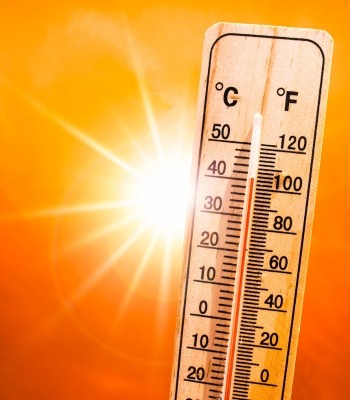
Introduction: The Hidden Power of Heat
What makes a car engine run, water boil, or ice cream melt? The answer is heat—a form of energy that’s constantly moving and transforming. Heat isn’t just about feeling warm; it’s a force that drives everything from natural processes to the machines we use every day.
In IB MYP 4 Physics, understanding heat is more than just memorizing facts. You’ll explore how heat transfers, why temperature matters, and how the science of heat powers the modern world. This journey will change the way you see everyday things like boiling water or a sunny day.
What Is Heat? The Basics Explained
Heat is a form of energy that moves from a hotter object to a colder one. It’s a transfer of thermal energy caused by a difference in temperature.
Key Terms You’ll Learn:
Temperature: A measure of how hot or cold something is, based on the average kinetic energy of its particles.
Thermal Energy: The total energy of all the particles in an object.
Heat Transfer: The movement of heat energy from one place to another.
Fun Fact:
The Sun’s heat travels 93 million miles through space to reach Earth—and it keeps us alive!
How Does Heat Transfer?
Heat moves in three main ways, and each has its own unique role in the world around us:
Conduction: Heat transfers through direct contact.
Example: A metal spoon gets hot when left in a pot of boiling soup.
How It Works: Particles in the hot end vibrate faster and transfer energy to neighboring particles.
Convection: Heat moves through fluids (liquids or gases) in a circular motion.
Example: Warm air rises from a heater, creating a convection current.
How It Works: Hot fluids become less dense and rise, while cooler fluids sink.
Radiation: Heat travels as electromagnetic waves, even through empty space.
Example: Feeling the warmth of the Sun on your skin.
How It Works: Infrared waves carry heat energy without needing a medium.
Why Does Temperature Matter?
Temperature isn’t just about how hot or cold something feels—it’s about the energy inside it.
Measuring Temperature:
Thermometers use materials like mercury or alcohol to expand when heated, giving a temperature reading.
Scales include Celsius (°C), Fahrenheit (°F), and Kelvin (K).
Absolute Zero:
The lowest possible temperature, where particles stop moving completely (-273.15°C or 0 K).
Real-Life Examples of Heat in Action
Heat energy affects everything we do, and it’s responsible for many everyday phenomena.
Cooking:
Heat transfers through conduction in frying pans, convection in boiling water, and radiation in ovens.
Weather:
The Sun heats Earth’s surface, creating wind patterns and ocean currents through convection.
Transportation:
Engines convert heat energy from fuel into mechanical energy to power vehicles.
Home Heating:
Radiators and heaters use convection and radiation to warm rooms efficiently.
Heat and Its Role in the Universe
Heat energy isn’t just important on Earth—it’s a driving force across the universe.
The Sun:
The Sun’s core is a blazing 15 million degrees Celsius, powered by nuclear fusion that releases massive amounts of heat energy.
Volcanoes and Geothermal Energy:
Heat from Earth’s interior creates volcanic eruptions and powers geothermal plants.
Stars and Space:
Heat from dying stars helps form new planets and galaxies.
Understanding heat gives you a glimpse into how the universe works on both small and massive scales.
Experimenting With Heat: Hands-On Learning
IB MYP 4 Physics makes learning about heat exciting and interactive. Here are some fun experiments you might try:
Conduction Test:
Place a metal spoon and a wooden spoon in hot water and feel which heats up faster.
Observation: Metal is a better conductor of heat than wood.
Convection in Action:
Add food coloring to warm water and watch it rise, while cooler water sinks.
What You’ll Learn: How convection currents move heat in fluids.
Measuring Radiant Heat:
Use a black and white surface under sunlight and measure their temperatures.
What You’ll Learn: Dark surfaces absorb more heat radiation than light ones.
Common Misconceptions About Heat
Let’s clear up some misunderstandings about heat and temperature:
Misconception: “Heat and temperature are the same.”
Truth: Heat is energy transfer, while temperature measures particle energy.
Misconception: “Cold is the opposite of heat.”
Truth: Cold is just the absence of heat energy.
Misconception: “Metal feels colder than wood because it’s naturally colder.”
Truth: Metal conducts heat away from your hand faster, making it feel colder.
Why Heat Science Matters for Your Future
Learning about heat is more than just academic—it’s a foundation for solving real-world problems:
Engineering:
- Designing energy-efficient machines, homes, and vehicles.
Sustainability:
- Developing better insulation and renewable energy systems to combat climate change.
Medicine:
- Heat therapy and advanced tools like lasers use thermal energy for healing.
Understanding heat prepares you to tackle challenges in science, technology, and beyond.
The Future of Heat Energy
Scientists are constantly exploring new ways to use and control heat. Here are some exciting developments:
Thermal Batteries:
- Storing heat for use in renewable energy systems.
Nanotechnology:
- Manipulating heat at the atomic level for super-efficient materials.
Space Exploration:
- Using heat shields to protect spacecraft re-entering Earth’s atmosphere.
Your studies in IB MYP 4 could one day contribute to these groundbreaking technologies.
Conclusion: Heat Powers Everything
From boiling water to powering rockets, heat is an essential force that keeps our world moving. Through IB MYP 4 Physics, you’ll explore the science behind heat transfer, temperature, and energy transformation. With hands-on experiments and real-world examples, you’ll see how heat connects to every part of life—and how understanding it can lead to amazing discoveries.
So next time you feel the warmth of the Sun or boil a pot of water, remember: you’re witnessing the incredible power of heat in action.