Introduction: The Art of Separation
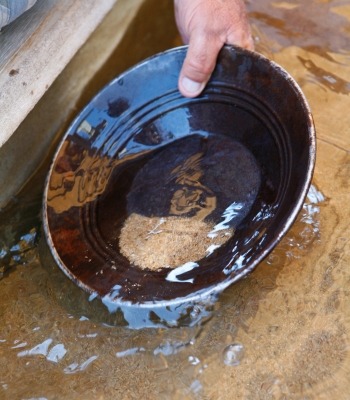
Imagine finding gold in a riverbed or purifying water to make it safe to drink. Both scenarios rely on the principles of separating mixtures. In IB MYP 4 Chemistry, separation techniques are essential for understanding how scientists isolate and purify substances from complex mixtures.
This blog explores the science behind separating mixtures, the methods used in everyday life and industry, and how these processes connect to real-world applications.
What Are Mixtures? A World of Possibilities
A mixture is a combination of two or more substances that retain their individual properties. Unlike compounds, mixtures are not chemically bonded, making them easier to separate.
Homogeneous Mixtures:
- Uniform composition throughout (e.g., saltwater, air).
Heterogeneous Mixtures:
- Non-uniform composition with visible components (e.g., sand and iron filings).
Separation Techniques: Turning Chaos Into Order
Separation techniques exploit physical properties like size, solubility, and boiling points to isolate components of a mixture. Here are the most common methods:
Filtration:
- Separates solids from liquids using a filter.
- Example: Filtering sand from water.
Evaporation:
- Removes a liquid from a solution to leave behind a solid.
- Example: Evaporating water from saltwater to obtain salt.
Distillation:
- Separates liquids based on differences in boiling points.
- Example: Distilling crude oil into gasoline and other fuels.
Chromatography:
- Separates substances based on their movement through a medium.
- Example: Identifying pigments in ink.
Magnetic Separation:
- Uses magnets to separate magnetic materials from non-magnetic ones.
- Example: Removing iron filings from sand.
Applications of Separation Techniques
Water Purification:
- Filters and distillation systems make water safe to drink.
Mining and Metal Extraction:
- Magnetic separation and flotation isolate valuable minerals.
Food Industry:
- Chromatography ensures food safety by identifying contaminants.
Healthcare:
- Blood plasma separation and drug purification rely on these techniques.
Hands-On Experiments: Separating Mixtures in Action
In IB MYP 4 Chemistry, students can perform engaging experiments to understand separation methods:
Filtration Experiment:
- Mix sand and water, then filter the mixture to isolate the sand.
- Learning Outcome: Understand the physical separation of solids and liquids.
Simple Distillation:
- Distill saltwater to collect pure water and salt.
- Learning Outcome: Explore the principle of boiling points.
Paper Chromatography:
- Separate colors in marker ink using filter paper and water.
- Learning Outcome: Observe how solubility and molecular size affect movement.
Common Misconceptions About Separation
Misconception: “All mixtures can be separated easily.”
- Truth: Some mixtures, like alloys, require complex processes to separate.
Misconception: “Distillation works for all liquids.”
- Truth: Distillation requires liquids with significantly different boiling points.
Misconception: “Chromatography is only for scientists.”
- Truth: Chromatography has everyday uses, like testing water purity.
The Future of Separation Science
Advances in separation techniques are transforming industries and solving global challenges:
Desalination:
- Innovative methods like reverse osmosis are addressing global water shortages.
Recycling Technology:
- New separation processes make recycling more efficient and sustainable.
Nanotechnology:
- Nanofiltration techniques improve water purification and drug delivery.
Why Separation Techniques Matter in IB MYP 4 Chemistry
Understanding separation techniques equips students with essential skills:
Problem-Solving:
- Select appropriate methods for different mixtures.
Real-World Connections:
- Relate classroom concepts to industries like mining, healthcare, and food production.
Environmental Awareness:
- Explore how separation processes contribute to sustainability.
Conclusion: From Chaos to Clarity
Separation techniques are the unsung heroes of science, turning complex mixtures into pure, usable substances. Through IB MYP 4 Chemistry, students learn to master these processes, uncovering the principles that make modern life possible.
Are you ready to explore the art and science of separation, and see how it transforms chaos into clarity? Let’s dive into this fascinating topic and discover the magic behind the methods.