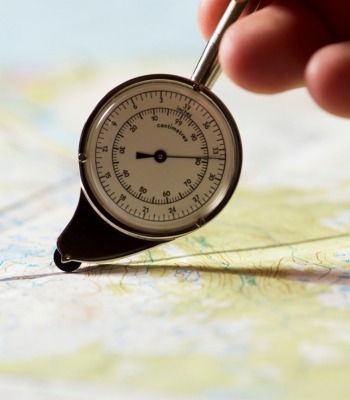
Have you ever wondered how architects design skyscrapers or how engineers estimate the water in a reservoir? The secret lies in understanding perimeter, area, and volume—the building blocks of measurement. For IGCSE Grade 9 Math (0580) students, mastering these concepts isn’t just about solving textbook problems; it’s about shaping and measuring the real world.
In this blog, we’ll explore how perimeter, area, and volume connect to real-life applications and exciting careers while showing why they’re crucial for modern problem-solving.
1. What Are Perimeter, Area, and Volume?
Perimeter
The perimeter is the total distance around the edges of a 2D shape.
Formula Examples:
Rectangle:Perimeter=2(Length+Width)Perimeter=2(Length+Width)
Triangle:Perimeter=Sum of all sidesPerimeter=Sum of all sides
Real-Life Connection:
Fencing a garden or framing a painting requires accurate perimeter calculations.
Area
The area is the amount of space inside a 2D shape.
Formula Examples:
Rectangle:Area=Length×WidthArea=Length×Width
Triangle:Area=12×Base×HeightArea=21×Base×Height
Real-Life Connection:
Calculating the area helps determine how much paint to buy for a wall or how many tiles you need for a floor.
Volume
The volume measures the space a 3D object occupies.
Formula Examples:
Cuboid:Volume=Length×Width×HeightVolume=Length×Width×Height
Cylinder:Volume=π×Radius2×HeightVolume=π×Radius2×Height
Real-Life Connection:
Volume is essential for filling swimming pools, fuel tanks, or storage containers.
2. Perimeter, Area, and Volume in Everyday Life
a) Architecture
Architects calculate area to design rooms and ensure optimal use of space.
Volume is crucial for creating water tanks or storage units in buildings.
Example:
An architect designing a house calculates the perimeter of the walls to estimate materials for construction.
b) Agriculture
Farmers calculate the area of their fields to estimate seed or fertilizer requirements.
Example:
A farmer uses the area of a rectangular field to determine how much wheat can be planted.
c) Shipping and Logistics
Volume calculations ensure goods fit into containers efficiently, minimizing costs.
Example:
Logistics companies use volume to plan shipping crates and trucks.
3. Exploring Complex Shapes
Sometimes, you’ll encounter shapes that aren’t regular rectangles or circles. These are called compound shapes.
Steps to Solve Compound Shapes:
Divide the shape into smaller, familiar shapes.
Calculate the area or volume of each part.
Add the results to get the total.
Example:
A swimming pool with a rectangular main area and a semi-circular end can be broken into two parts for separate calculations.
4. Real-World Applications of Perimeter, Area, and Volume
a) Sports
Calculating the perimeter of a running track or the area of a soccer field.
Determining the volume of a basketball or soccer ball.
b) Interior Design
Measuring carpet area or the volume of furniture to fit in a room.
c) Water Management
Estimating the volume of water reservoirs or tanks to plan usage efficiently.
Real-Life Connection:
An Olympic swimming pool requires precise volume calculations to manage water quality and temperature.
5. Careers That Use Measurement Skills
Mastering perimeter, area, and volume opens doors to various careers:
Civil Engineer: Designs bridges, dams, and buildings using accurate measurements.
Surveyor: Measures land for construction and legal purposes.
Interior Designer: Optimizes space and calculates material requirements.
Event Planner: Plans venue layouts and seating arrangements.
Hydrologist: Studies water resources and designs reservoirs.
IGCSE Math Connection (0580):
These careers demonstrate the importance of understanding measurement in real-world scenarios.
6. Fun Activities to Explore Perimeter, Area, and Volume
a) Design Your Dream Room
- Sketch a room layout, calculate its area, and plan furniture placement.
b) Build a 3D Model
- Use cardboard to create a 3D object and calculate its volume.
c) Outdoor Measurement Challenge
- Measure the perimeter of a park or the area of a playground.
IGCSE Math Connection (0580):
These activities enhance hands-on learning and make abstract concepts practical.
7. Fun Facts About Measurement
Largest Area Calculation: The Great Wall of China has an area of 21,196 square kilometers!
Volume in Nature: Mount Everest displaces about 1 trillion cubic meters of rock.
Perimeter in Daily Life: The equator, the perimeter of Earth, measures approximately 40,075 kilometers.
8. Why Measurement Matters for IGCSE Grade 9 Math (0580)
Understanding perimeter, area, and volume is foundational for tackling advanced topics like trigonometry, geometry, and mensuration in IGCSE Grade 9 Math (0580). These skills are critical for solving real-world problems and pursuing STEM careers.
Conclusion
Perimeter, area, and volume are more than just math concepts—they’re the tools that measure and shape the world around us. For IGCSE Grade 9 Math (0580) students, mastering these measurements means gaining practical skills that extend beyond the classroom. The next time you measure a room, calculate the area of a garden, or fill a container, remember—you’re applying the mathematics of measurement in action!