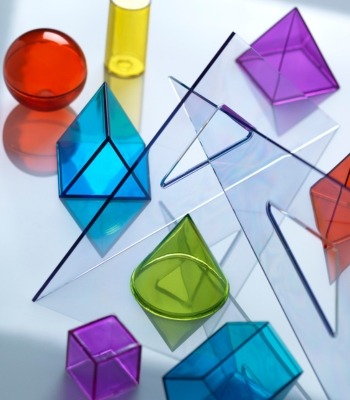
Have you ever noticed the perfect symmetry of a snowflake, the precision of a bridge, or the design of a soccer ball? Behind these marvels lies the magic of angles and shapes—the fundamental tools of geometry. For IGCSE Grade 9 Math (0580) students, mastering angles and shapes isn’t just about passing tests; it’s about understanding how the world is built.
In this blog, we’ll explore the role of angles and shapes in real life, connect them to careers, and reveal why geometry is a universal language of design and innovation.
1. What Are Angles and Shapes?
Angles
An angle is formed when two lines meet at a point (vertex). Angles are measured in degrees (°) and describe how much two lines diverge from one another.
Types of Angles
Acute Angle: Less than 90°.
Right Angle: Exactly 90°.
Obtuse Angle: Greater than 90° but less than 180°.
Straight Angle: Exactly 180°.
Reflex Angle: Greater than 180° but less than 360°.
Shapes
Shapes can be 2D (e.g., triangles, squares) or 3D (e.g., cubes, spheres), and they form the foundation of all structures around us.
2. Why Are Angles and Shapes Important?
Real-Life Examples:
- Architecture: Angles and shapes ensure buildings are strong and visually appealing.
- Art and Design: Symmetry and proportion are based on geometric principles.
- Technology: Angles are crucial in coding graphics for video games and animations.
Real-Life Connection:
When designing a bridge, engineers calculate the angles to distribute weight evenly and ensure stability.
3. Exploring Properties of Shapes
a) Triangles
- The sum of the interior angles is always 180°.
- Types: Equilateral, isosceles, and scalene.
Example:
In construction, triangular shapes are used for roof trusses because they’re inherently stable.
b) Quadrilaterals
- The sum of the interior angles is always 360°.
- Types: Squares, rectangles, parallelograms, and trapeziums.
Example:
Floor tiles often use square or rectangular shapes for easy installation and symmetry.
c) Circles
- A circle has 360° around its center.
- Properties include the radius, diameter, and circumference.
Example:
The wheels on vehicles are circular to ensure smooth and balanced movement.
4. Rules of Angles: The Basics
a) Angles on a Straight Line
- Always add up to 180°.
Example:
Designers use this rule to create straight paths and borders.
b) Angles Around a Point
- Always add up to 360°.
Example:
This rule is essential for creating pie charts and circular layouts.
c) Angles in Triangles
- Interior angles add up to 180°.
Real-Life Connection:
Surveyors use this principle to measure land accurately.
5. Real-World Applications of Geometry
a) Engineering
- Engineers calculate angles to design structures like bridges, towers, and airplanes.
b) Navigation
- Pilots and sailors use angles to calculate routes and directions.
c) Robotics and AI
- Angles are crucial for programming the movements of robots and drones.
Real-Life Example:
In space exploration, precise angles ensure satellites enter their intended orbits.
6. Careers That Use Angles and Shapes
Mastering angles and shapes can lead to exciting careers:
Architect: Designs buildings using geometric principles.
Civil Engineer: Constructs bridges, roads, and other infrastructure.
Animator: Creates 3D models and animations using geometry.
Cartographer: Draws maps with accurate angles and distances.
Fashion Designer: Uses geometric patterns to create stylish clothing.
7. Fun Activities to Explore Angles and Shapes
a) Create a Shape Collage
- Cut out different shapes and combine them to form unique designs.
b) Build a Paper Bridge
- Use triangular shapes to build a sturdy paper bridge and test its strength.
c) Angle Hunt
- Identify and measure angles in everyday objects like doors, books, and furniture.
IGCSE Math Connection (0580):
These activities make geometric concepts engaging and practical.
8. Fun Facts About Angles and Shapes
Nature’s Geometry: Honeycombs have hexagonal shapes because they’re efficient and use less material.
Perfect Shape: The circle is considered the most perfect shape because all points are equidistant from the center.
Pyramids: Ancient Egyptians used geometric principles to construct the pyramids.
9. Why Geometry is Essential for IGCSE Grade 9 Math (0580)
Angles and shapes are foundational concepts in IGCSE Grade 9 Math (0580) that connect directly to trigonometry, mensuration, and data visualization. Mastering them builds critical thinking and spatial awareness skills.
Conclusion
Angles and shapes are everywhere, from the design of a football to the construction of skyscrapers. For IGCSE Grade 9 Math (0580) students, mastering geometry is more than just an academic requirement—it’s the key to understanding and shaping the world. The next time you see a triangle or measure an angle, remember—you’re unlocking the secrets of the universe!